Discover Centennial Airport (KAPA)
Users
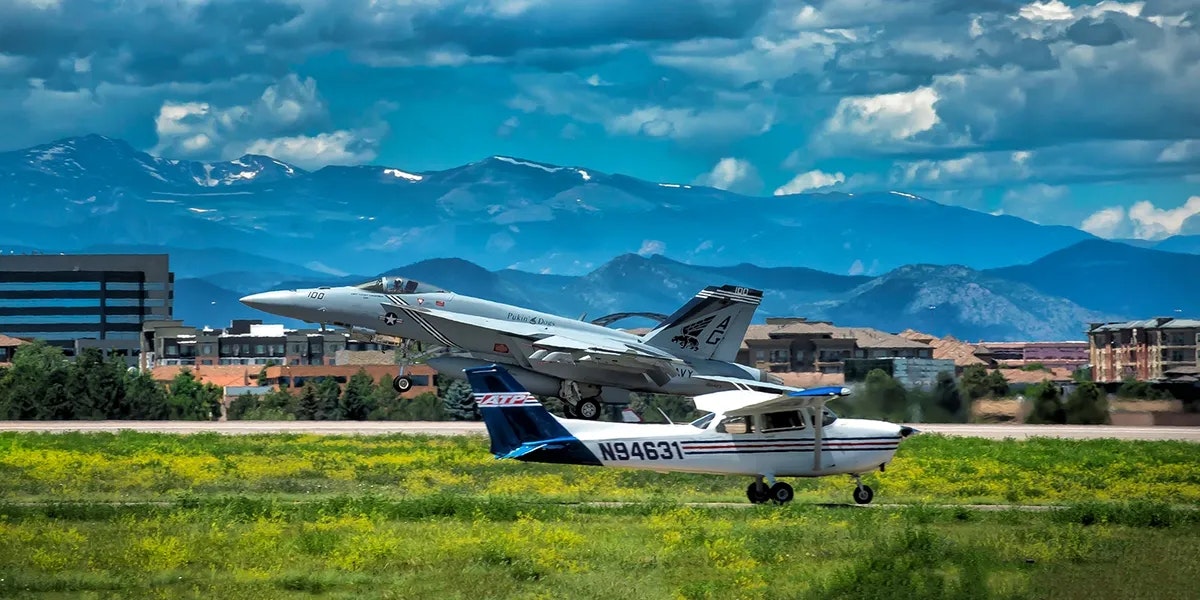
Centennial Airport is a public-use airport providing nonstop service, including 24/7 Customs for international travelers, to a wide variety of users including medevac and air ambulance services, military and Department of Defense, flight schools, aerospace research, corporate businesses, charter operations, cargo, and more.
Economic Impact
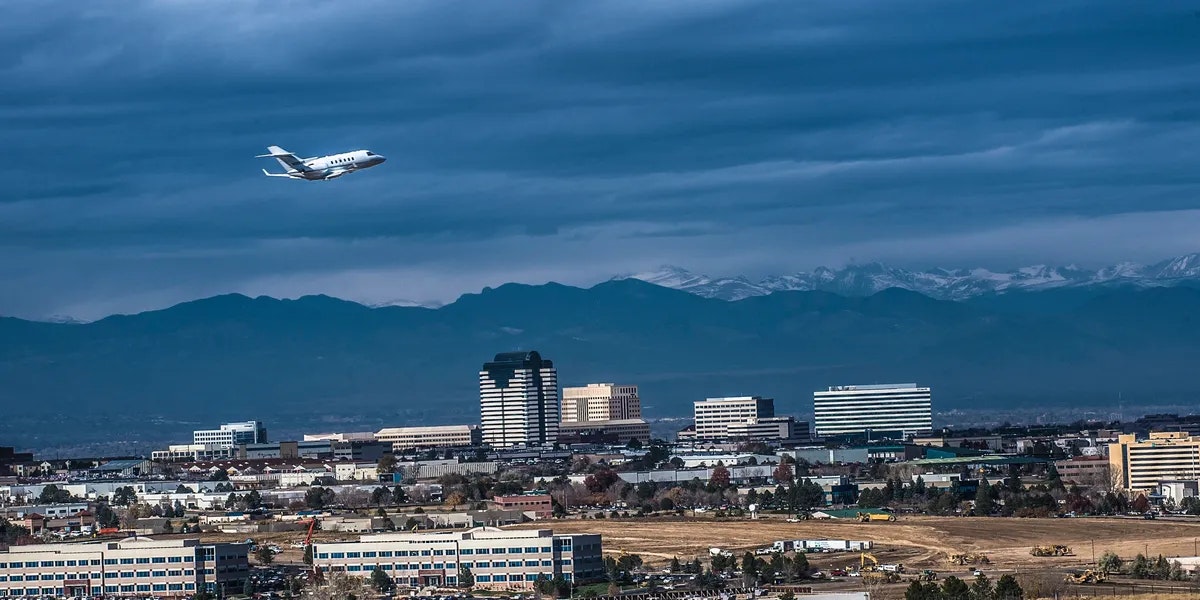
As one of the busiest general aviation airports in the world, Centennial Airport is home to over 125 businesses, and supports over 9,200 jobs in the region. We are financially self-sufficient, accepting no local taxpayer money, and are responsible for generating $2.4 billion in economic impact for the local and regional economy.
2025 Aviation Economic Impact Study
Vital Lifeline for Communities
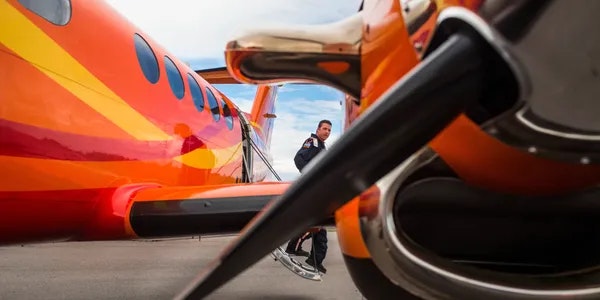
Whether through medical evacuation flights transporting patients to care facilities, fueling firefighting aircraft during critical wildfire response hours, or supporting humanitarian missions delivering aid, we connect people in need with essential resources. Additionally, the largest air-ambulance companies in Denver provide service to the entire region through Centennial Airport; transporting patients, blood, and organs to points throughout the state and country. Nestled near 4 major hospitals, we proudly supported 6,107 lifesaving flights in 2025 alone.
More Than an Airport
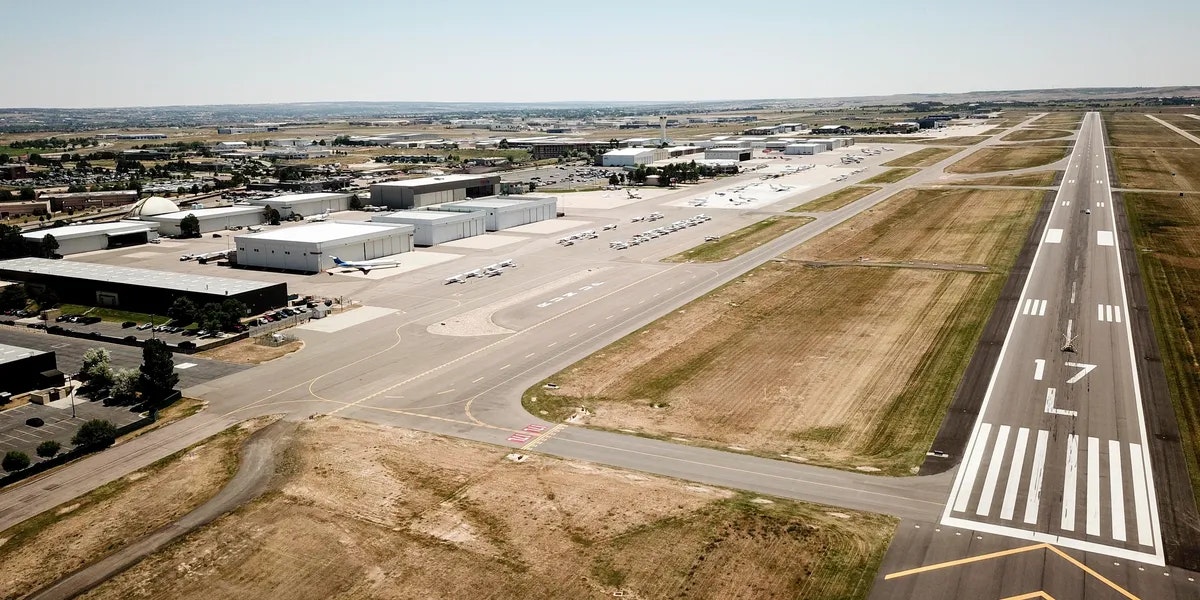
Apart from aeronautical use, we also support community engagement by being home to the Wings Over the Rockies Exploration of Flight museum, Colorado Karting Circuit Go-Kart Track, Family Sports Center and golf course, the Perfect Landing Restaurant and Avalanche Grill, and a hotel. In addition, South Metro Fire Rescue Station 35 sits conveniently on airport property and services the airport and the surrounding community.
Leader in Sustainability
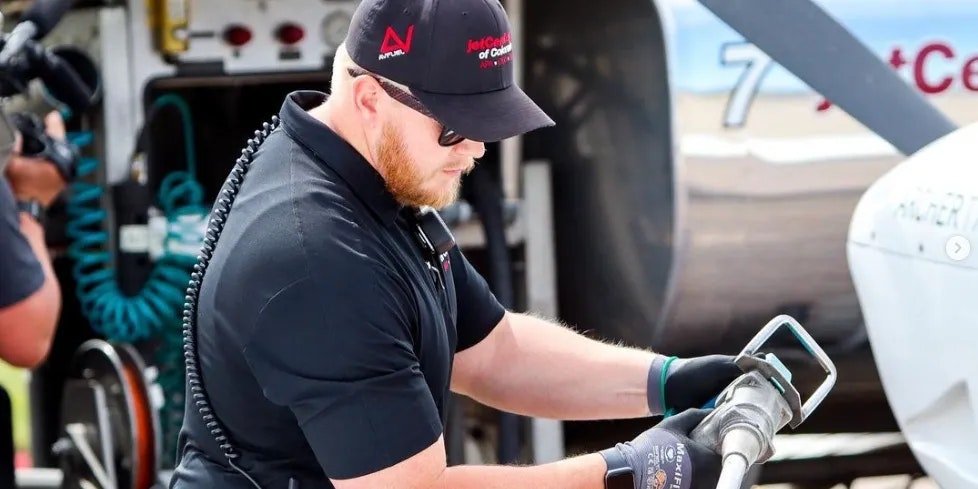
We achieve operational efficiency through economic vitality, social responsibility, and responsible use of natural resources. As leaders in environmental sustainability, we have pioneered initiatives such as offering unleaded Avgas—the first in Colorado—and implementing Fluorine-Free Firefighting Foam in our ARFF trucks. Our extensive efforts, detailed in our Sustainability Plan, earned us both a Gold Award and the Innovation Spotlight Award from the Colorado Green Business Network.
Giving Back
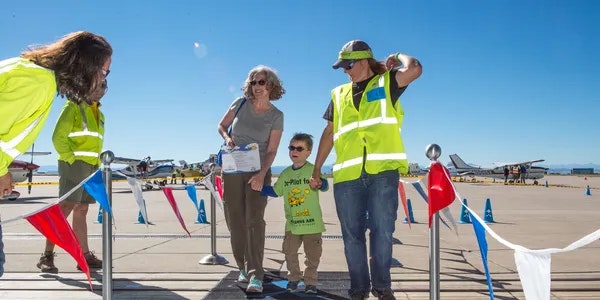
We host several charity events each year and actively sponsor and support numerous charitable initiatives through the Centennial Airport Foundation. In addition, our own initiatives to give back include quarterly blood drives, and the Runway 5K to provide scholarships and other support to those seeking a career in aviation — demonstrating our commitment to social responsibility.
Our Operations
In 2023, Centennial Airport connected travelers to 1,663 locations, including all 50 states and 41 additional countries. By comparison, in the same year, Denver International Airport connected travelers to 824 destinations (nearly half), and 46 additional countries.
See our year here:
Frequently Asked Questions
Centennial Airport is a public general aviation airport, which includes all civil and military aviation operations except for commercial scheduled air services. We act as a reliever airport to help reduce congestion at Denver International Airport. As an international airport with 24/7 U.S. Customs services, we offer non-stop service year-round.
Founded in 1968, Centennial Airport has grown to become one of the world’s busiest general aviation airports, in fact the busiest in 2023 with 360,725 aircraft operations. The record year at Centennial occurred in 1998 with 466,267 aircraft operations. An operation is defined by the FAA as a takeoff or a landing.
Centennial Airport serves a wide variety of users from medevac and air ambulance services, military and Department of Defense, flight schools, research and development, private, corporate businesses, charter operations, cargo, and more. Approximately 850 aircraft are based at the airport, including 180 jet aircraft. Spanning both Arapahoe and Douglas Counties, we are home to over 125 businesses, and more than 9,200 jobs in the region rely on the airport.
Apart from aeronautical use, Centennial Airport is a community hub with attractions like the Wings Over the Rockies Exploration of Flight, Colorado Karting Circuit, Family Sports Center and golf course, the Perfect Landing Restaurant, Avalanche Grill, and a hotel. Additionally, South Metro Fire Rescue Station 35 is located on-property.
The Arapahoe County Public Airport Authority is a quasi-governmental entity that owns and operates Centennial Airport. It is governed by a Board of Commissioners which include five voting members appointed by the Arapahoe County Board of Commissioners and three ex-officio Douglas County Commissioners or their appointees.
Centennial Airport is responsible for generating approximately $2.4 billion in direct and indirect economic impact for the local and regional economy according to the CDOT 2025 Airport Economic Impact Report. The economic impact of the Airport is measured through jobs employed, payroll distributed, business revenues, and value added (business revenue earned minus costs of purchasing goods and services). That same year, 9,236 jobs depended on Centennial Airport.
Centennial Airport is financially self-sufficient through three major categories. Fees and taxes collected by fuel sales account for approximately 50% of our revenue. Land leased to tenants accounts for approximately 35% of our revenue; and includes aeronautical leases such as hangars, and non-aeronautical leases such as the hotel, go-kart track, and golf course. Concessions fees, commercial activity fees, and construction fees account for the remaining approximately 15% of revenue. These percentages fluctuate slightly on an annual basis.
No. Centennial Airport is self-sufficient and funded without local taxpayer money, relying solely on the tenant and users of the airport for its financial support. Centennial Airport does accept Federal and State Grants for capital improvement projects that are also funded through Federal and State taxes on aviation fuel.
Foundation and Educational Support
The Centennial Airport Foundation, a nonprofit supporting education and charitable causes, provides scholarships and contributes to aviation programs such as the Tuskegee Airmen Mile High Flight Program, MSU Denver, Cherry Creek Innovation Campus, and Douglas County Legacy Campus. Our Airport Management Internship offers one-year paid placements that prepares graduates for careers in aviation, with many graduates now employed in the industry. 13 of our 24 current fulltime employees began through our internship.
Charity
In addition to the Foundation, we proudly host and sponsor a variety of charitable events and organizations. We're also honored to serve as a base for several causes, allowing nonprofits and similar groups to utilize our airport in their efforts to give back.
Vital Lifeline
Whether through medical evacuation flights transporting patients to care facilities, fueling firefighting aircraft during critical wildfire response hours, or supporting humanitarian missions delivering aid, we connect people in need with essential resources. Additionally, the largest air-ambulance companies in Denver provide service to the entire region through Centennial Airport; transporting patients, blood, and organs to points throughout the state and country. Nestled near 4 major hospitals, we proudly supported 6,107 lifesaving flights in 2025 alone.
Centennial Airport is open for business 24 hours a day, 7 days a week, and in most weather conditions. Although significantly less than daytime operations, the airport does have aircraft activity at night. Interstate Commerce Laws and Federal Grant Assurances prohibit restrictions on flight times.
Our administrative offices are open Monday through Friday (except holidays) from 8:30 a.m. until 4:30 p.m. at 7565 South Peoria Street, Unit D9, Englewood, CO 80112
In the 1950's before the surrounding area was developed, George M. Wallace began laying the groundwork for what has become one of the nation's most prominent business parks — the Denver Tech Center (DTC). Recognizing the critical role an airport plays in supporting such a thriving economic center, Wallace emphasizes the importance of aviation access to the DTC's success.
On May 12th, 1968, Centennial Airport (formerly Arapahoe Public Airport) opened. At the time, Arapahoe Road was only a two-lane dirt road leading to the Airport. Since then, the DTC has grown significantly, and with it, so has residential development and supporting facilities. Centennial Airport continues to work with the surrounding jurisdictions to establish compatible land use surrounding the airport.
Centennial Airport is a public-use airport and accepts federal funding for capital improvement projects. By accepting federal funding, the airport is required to adhere to “grant assurances”, one of which prohibits the restriction of aircraft using the airport, including military aircraft. Centennial Airport sees a variety of military aircraft operations, including F-18s, C130s, Blackhawks, and more. Military aircraft are not held to the same noise standards as civilian aircraft.
Aviation is one of the most heavily regulated industries in the United States. The Federal Aviation Administration (FAA) regulates everything from manufacturing of aircraft to flight rules and air traffic control in and out of airports. Because of this, aircraft travel remains the safest form of travel in the world. While aircraft accidents may be highly publicized, they are extremely rare with fewer than .07 deaths per billion passenger miles for aircraft versus 7.28 deaths per billion passenger miles for cars. (Source: Ian Savage, Northwestern University). The likelihood of an aircraft ground strike is many times smaller than getting hit by lightning or sustaining fatal injuries from a car accident.